
ab6765630000ba8a34ba77cee3dac69d94dfd293

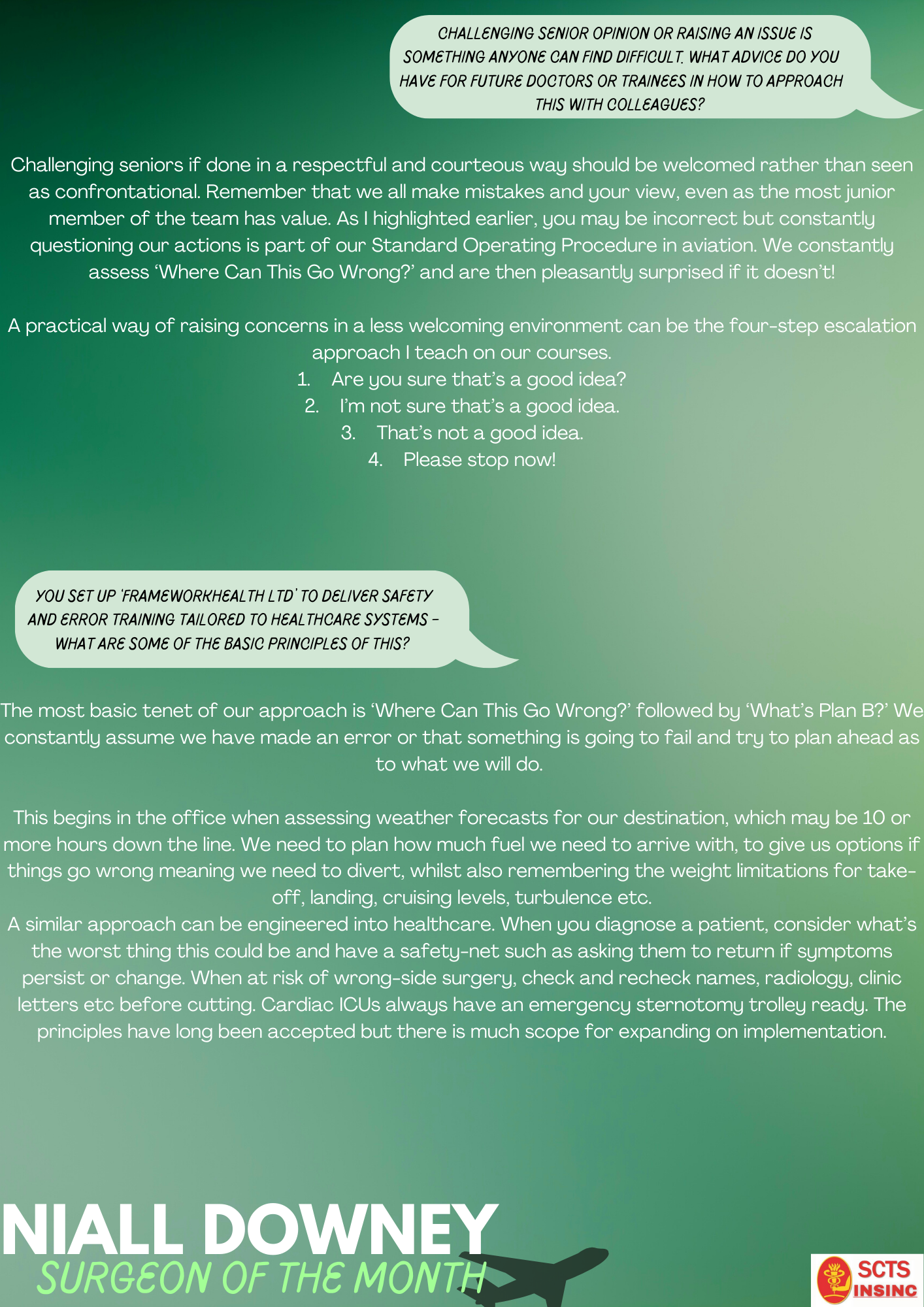
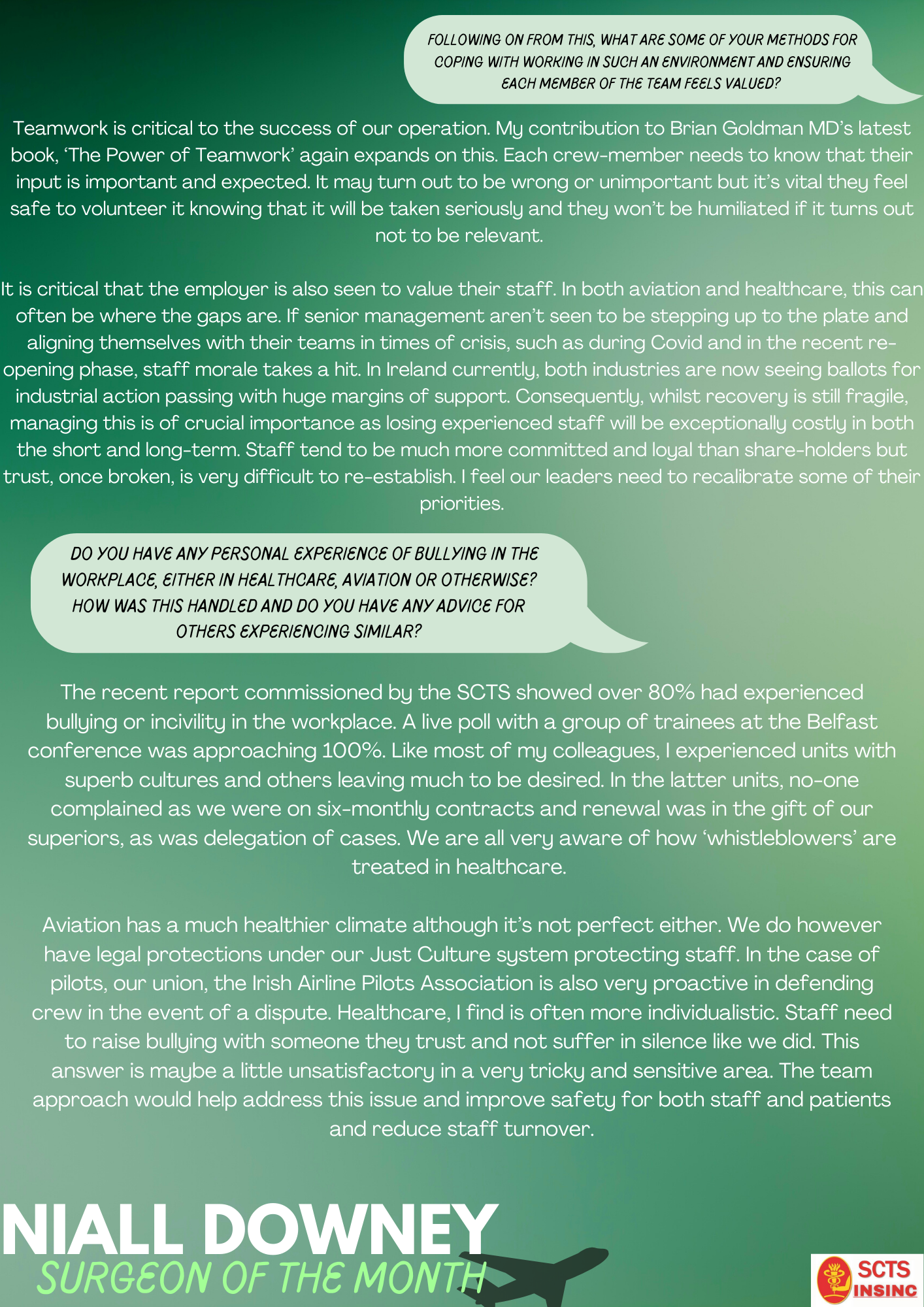
Season 3 – Episode 2 – Parallels and Misjudgements, Aviation and Healthcare – Captain Niall Downey FRCSI

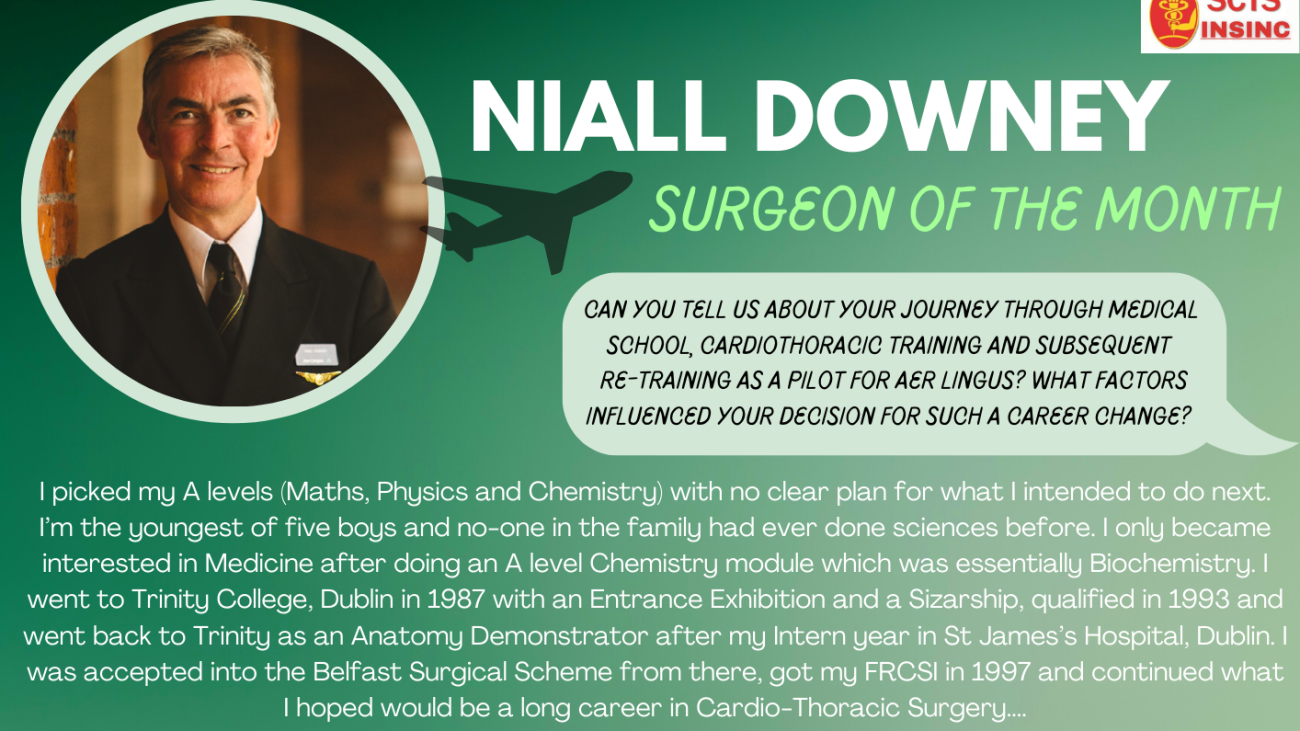
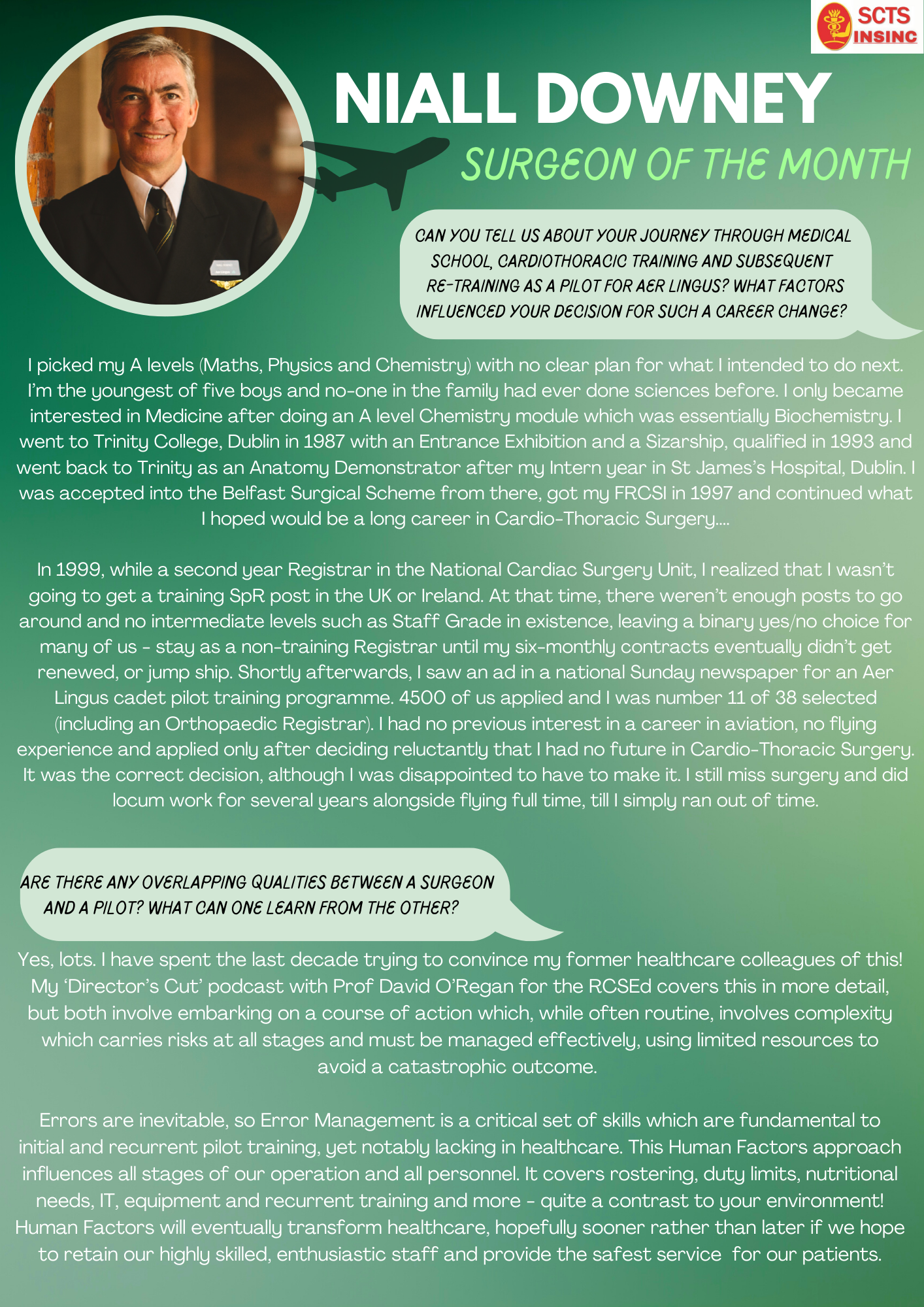
Niall qualified as a doctor from Trinity College, Dublin in 1993. He trained as a surgeon in Belfast and received his FRCSI in 1997. He was a trainee in cardio-thoracic surgery working as an SHO in the Royal Victoria Hospital, Belfast before returning to Dublin where he worked as a registrar in the National Cardiac Surgery Unit in the Mater Hospital and Our Lady’s Children’s Hospital, Crumlin.

He subsequently retrained as an airline pilot with Aer Lingus in 1999 and combined aviation with medicine by working as an Accident & Emergency doctor for six years before focusing fully on aviation. After operating as a co-pilot on both the European and Trans-Atlantic fleets, he qualified as a captain in 2010. He is currently operating out of their Manchester base on the Airbus A330 Trans-Atlantic fleet.

In 2011, Niall formed Frameworkhealth Ltd, a company providing aviation-style safety training modified specifically for healthcare which draws on his thirty-five years of experience between both industries. The company has since evolved into Framework Safety Group Ltd. This project aims to share aviation’s Safety Management System blended with Human Factors and Evolutionary Psychology with healthcare and other industries in order to address the huge issue of Adverse Events, usually caused by systemic faults but often blamed on the last individual to have touched the ball. Niall aims to encourage industries, especially healthcare to adopt a Just Culture, embed a systemic Human Factors approach and empower staff, patients and their families to speak up as part of the crew. His approach is based on the premise that technology and society have evolved faster in the last century than the human brain can accommodate so we need to adapt to account for this in order to reduce the number of adverse events. He has spoken at many conferences locally, nationally and internationally on the topic.

Niall has contributed articles both to specialist journals and national newspapers such as The Irish Times. He has also given interviews for national television including RTE TV News and Virgin Media and has been interviewed several times on BBC Radio. In 2016, Niall was appointed an Expert Advisor to the Northern Ireland Executive’s Dept of Health following a well received TEDx talk in Stormont’s Great Hall.

Niall cycled at national level for thirteen years and at pro-am international level for several years in the early 90s and was a member of Northern Ireland’s Commonwealth Games panel. He subsequently worked as Medical Officer for both the Federation of Irish Cyclists (now Cycling Ireland) and the Ulster Cycling Federation. He also worked as a Race Doctor at international level for six years.

In 2023, Niall had his first book, ‘Oops! Why Things Go Wrong’ published which explored the increasingly topical issue of error across industry and society generally and most importantly, how to address it. The book is already in it’s second print run after a higher than anticipated demand.
The success of the book has led to many invitations from outside healthcare, hence Frameworkhealth’s evolution into Framework Safety Group Ltd in recognition of this broadening scope.

smartmockups_lvdwj4so

HAS HEALTHCARE FINALLY REACHED ITS TENERIFE DISASTER?

Recent events both locally and in the UK

Such as the Inquiry into Hyponatraemia-related Deaths and the Bawa-Garba case – have the potential to be the turning point which our health service has been waiting for and the catalyst for long-awaited change. Do we want to keep blaming healthcare professionals for human error and demanding retribution without looking at the broader human factors picture of the environment they function in when we analyse why events happen? Niall Downey FRCSI sheds some light.

smartmockups_lvdw994i

Journal of Surgical Simulation

Have you ever made a mistake? The role of aviation-style error management in healthcare

Niall Downey 

Frameworkhealth, Newry, Northern Ireland, UK

Date accepted for publication: 26 April 2019

Abstract

Human error is inevitable in all walks of life. It generally has little effect, unless you work in a safety-critical industry.

Aviation and healthcare are two such industries although they have very different approaches to managing error. They also have very different outcomes regarding mortality/morbidity related to error. This paper discusses how aviation achieves these results and how they could be transferred to healthcare.

Aviation has a three-stage approach to managing error. First, we have a “Just Culture” which means we can own up to genuine mistakes without fear of disciplinary action or sanctions as long as we cooperate with investigating how the error occurred. It is not a “No-Blame” culture; we are still expected to take responsibility for our actions. Second, we investigate each event to find why the error occurred. We usually identify a “tripwire” which led to the individual making the error. We assess whether we can re-engineer the system to remove the tripwire and, if possible, add a safety net to reduce the chance of recurrence. Third, we train staff in error management as part of both initial training and recurrent training. Aviation globally is now focussing on introducing evidence-based training to better meet the needs of the crew and make most effective use of expensive training time.

These principles are relevant and transferable to healthcare and could potentially be equally successful there. Success, however, relies on a change in culture by both staff and patients. Error needs to be accepted as inevitable in healthcare, as it is in aviation, and that the outcome is determined by how it is managed. We need to focus on “what went wrong” as opposed to “who went wrong” and accept that attributing blame and demanding retribution is not  a sustainable approach.

Keywords: error management; healthcare; evidence-based training; human factors; aviation

4S4GFWGOAJDHFCHBGBQ5XUG3JU

To err is human. Divining how to react is what matters

Society is intolerant of error. We need to change this mindset. A doctor turned pilot applies his expertise to the problem

Our heavily curated Instagram society has become very intolerant of error. In an era where everything we present is airbrushed, tweaked, filtered and polished before being released into the wild, we labour under the misapprehension that the real world is similar. We are sadly mistaken. The real world is messy, imperfect and error-prone. My book, Oops! Why Things Go Wrong, explores why error is inevitable, how it affects many different industries and areas of society, sometimes catastrophically, and most importantly, what we can do about it.

It’s Not Your Fault

Society’s development has accelerated at warp speed over recent decades and shows no signs of slowing down. Unfortunately, our brains have had trouble keeping up and are trying to function in a highly complex, rapidly changing environment whilst still running on caveman software!

This dichotomy is the essence of what I explore in my book. The mismatch between the fast-paced environment and our inability to respond appropriately results in errors inevitably occurring. This is merely an inconvenience in many areas, but in safety critical industries such as aviation and healthcare it can literally mean life or death.

Society is, unfortunately, quite intolerant of error, especially in others! We need to change this mindset. Error is nothing to be ashamed of. The only way to come close to avoiding error is to be so cautious and risk averse that we stifle innovation altogether, and in healthcare that would mean avoiding intervention in any but the easiest of cases….

WhatsApp Image 2024-03-27 at 19.55.27 (4)

Mr David O’Regan in conversation with: Niall Downey

Mr David O’Regan, Director of the Faculty of Surgical Trainers, offers this new video series exploring topics that are pertinent to surgical training and trainers. He looks beyond the field of surgery and interviews internationally recognised professionals in their own fields. He also features conversations with a select group of esteemed surgeons who are recognised for their impact on effective training – both giving and receiving – has had on their career and their legacies. Role modelling, situation awareness and team playing are key to reading any training scenario and David will discuss with his guests how a variety of skills required across a huge range of industries can benefit discussions and offer best practice in Surgical Training.    

 
bd230480-6ac5-400d-b46d-be5861290ea7

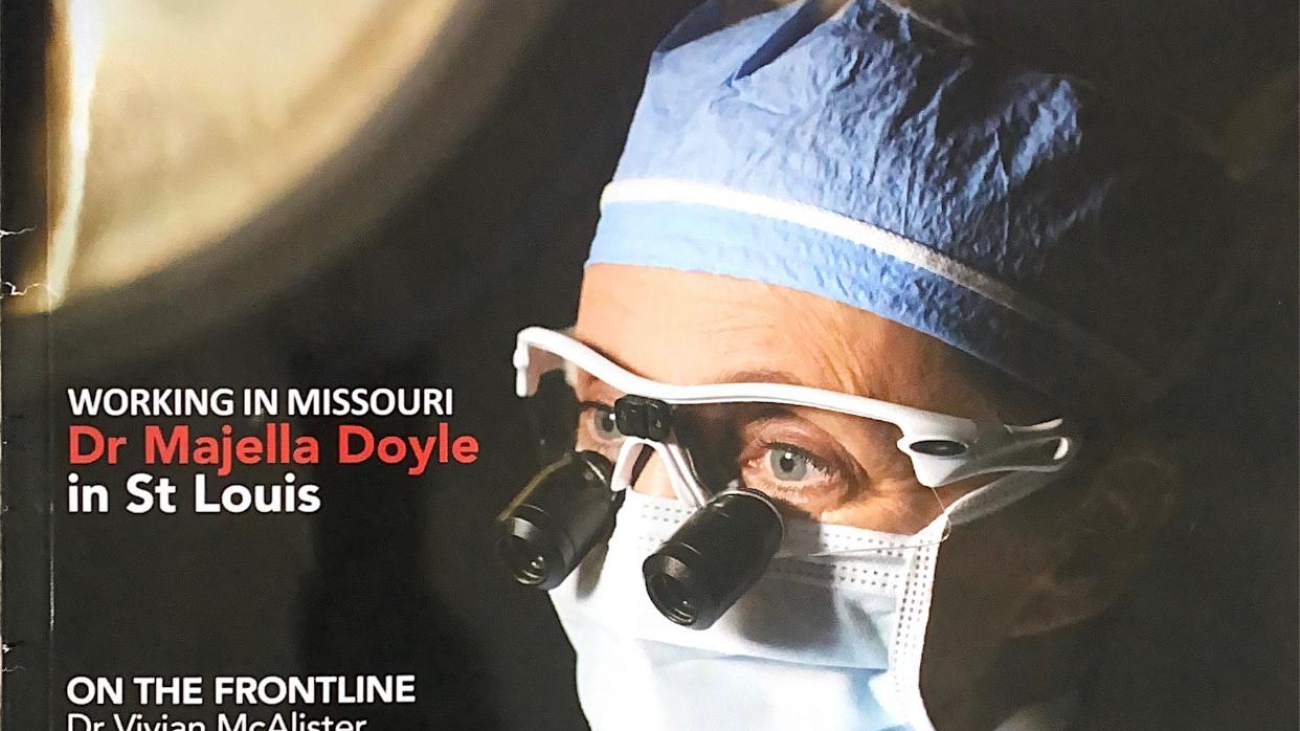
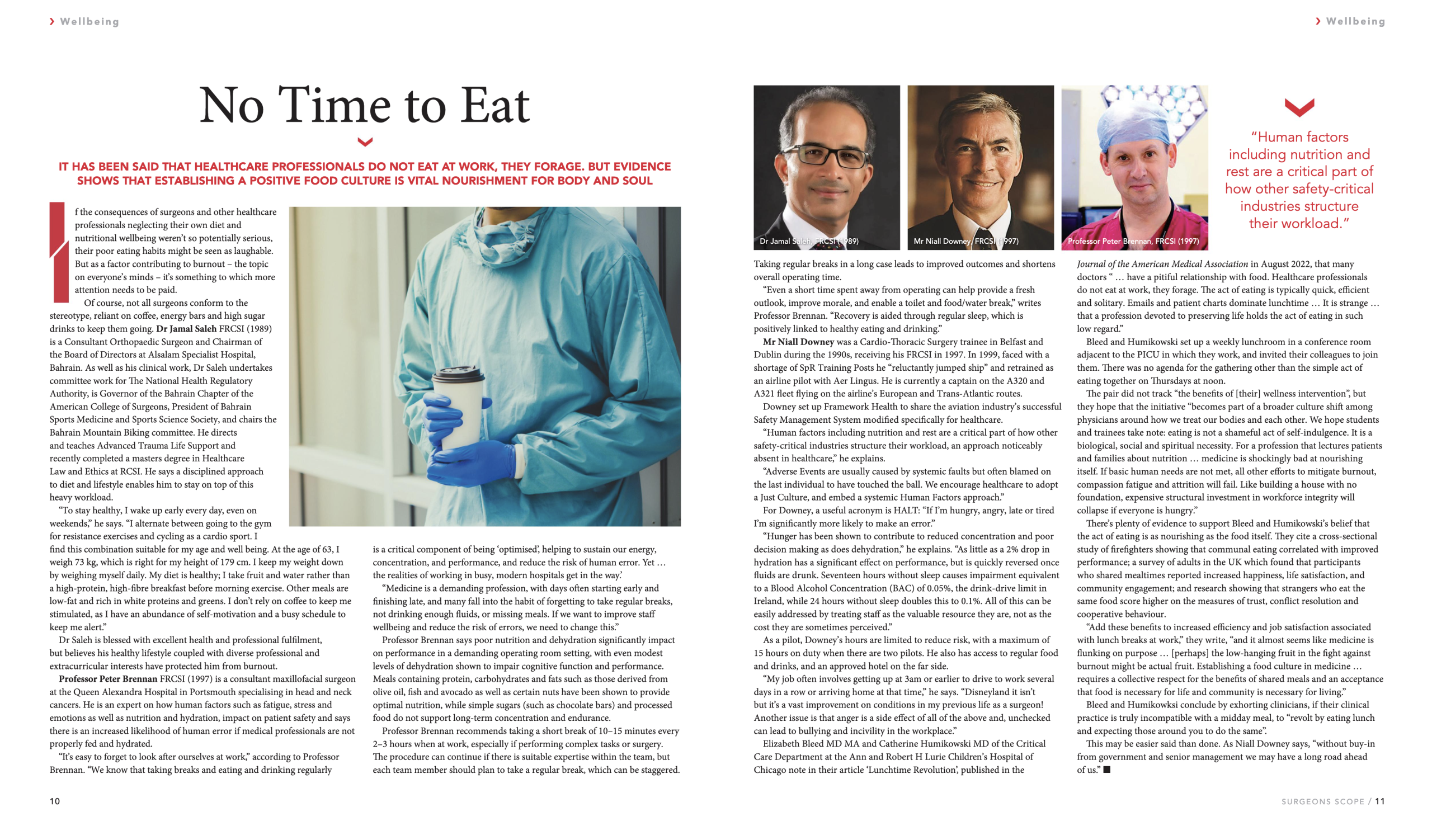
Surgeons Scope: No Time to Eat

Surgeons’ Scope is our biannual publication for Fellows and Members. In this edition, our regular ‘A Surgeon In’ feature catches up with Professor Majella Doyle who reflects on her impressive career as a liver transplant surgeon and explains how, as a “home bird at heart”, she ended up in St Louis, Missouri. RCSI Fellow Dr Vivian McAlister goes ‘Back to the Beginning’, reflecting on his personal and professional journey, his role as a Lieutenant Colonel in the Canadian Forces Health Services and his experience of deployment to Afghanistan and lots more…. We hope you enjoy the read.

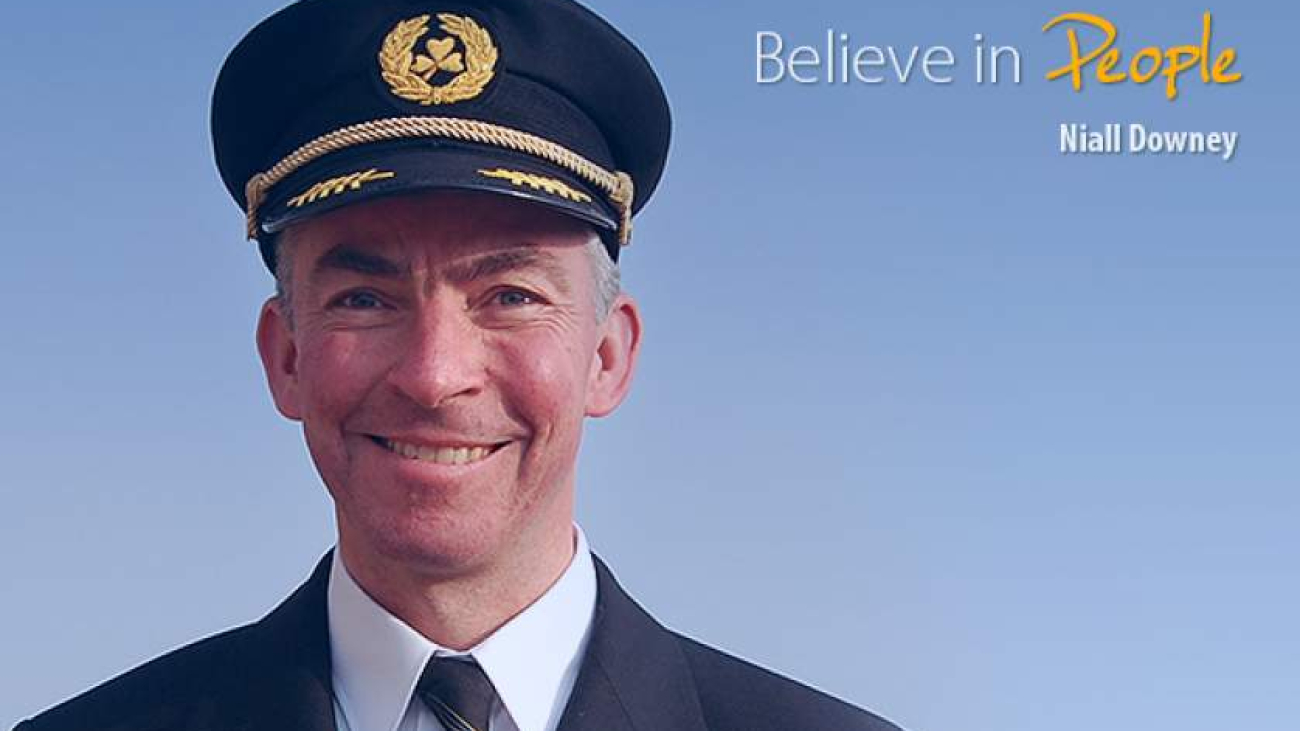
website-believeinpeople-downey4 (1)

Policy makers need to incentivise the cultural change necessary for innovation

We want to create the setting that allows individuals to take the initiative to benefit themselves and society as a whole. We believe in people that try out new ideas, take risks, aren’t afraid of failure. People who pick themselves up and keep going till they get there. They adapt, change, learn, reform, grow and create. People like Niall Downey. In early 2011, he set up Frameworkhealth Ltd, a start-up company based in Northern Ireland. Using his unusual dual qualifications as both a surgeon and an airline pilot, Niall had a unique vision: bringing aviation safety techniques – some of the most stringent in the world – to healthcare, to try to reduce the number of patients being inadvertently harmed by simple human error in our health services. Innovating for our safety It is now broadly accepted that 10% of hospital admissions suffer harm due to human error. It is also accepted that between 3-10% of these suffer harm leading to or contributing to their death….